Interior Design DrHomey isn’t about filling a house with expensive objects and hoping for magic. It’s about shaping a home that feels warm, works smoothly, and reflects your daily life. That balance matters because most people don’t want a stiff showroom. You want rooms that welcome you, support you, and still look polished at the end of a long day.
At its core, this design approach blends comfort-first interiors, smart space planning, and personal style. DrHomey’s own design content keeps returning to the same ideas: warmth, function, personality, and thoughtful flow. In simple terms, that means every color, chair, lamp, and layout choice should earn its place instead of just taking up space.
Why Interior Design DrHomey Feels Better Than Trendy Decor
Many homes look good in photos yet feel awkward in real life. The sofa is too large, the lighting is flat, and the room has no breathing room. DrHomey’s design philosophy avoids that trap by tying beauty to usefulness. The site describes good interiors as spaces built around style, function, and personality instead of clutter or empty fashion.
That’s why this method works so well for modern families, apartment dwellers, and busy professionals. It doesn’t ask you to live around your furniture. Instead, it asks your furniture to support your life. A reading chair should invite you to sit down. A kitchen layout should save steps. A bedroom should calm your nerves, not feel like a bright airport lounge.
Another strength lies in emotional design. A home should stir something in you. Soft textures, warm light, meaningful objects, and familiar colors make rooms feel grounded. DrHomey highlights cozy palettes, layered materials, and personal touches because those elements create the sense of welcome people actually remember.
What Makes This Style Work So Well
Before you buy anything, start with movement. A beautiful room fails fast when you keep bumping into tables or walking around badly placed chairs. DrHomey’s floor plan guidance stresses room relationships, circulation, privacy, and built-in functionality. Those details may sound technical. However, they affect everyday comfort more than any throw pillow ever could.
Likewise, lighting does far more than help you see. It shapes mood, depth, and comfort. Architectural Digest recommends layered lighting with ambient, task, and accent sources. It also notes that warmer bulbs around 2700K usually create a softer glow, while dimmers help you adjust the room through the day. That small shift can make a basic room feel richer and more relaxed.
Then comes practicality. In kitchens and high-use spaces, good design needs proper clearances and smart work zones. The NKBA recommends work aisles of at least 42 inches for one cook, 48 inches for two cooks, and traffic paths that don’t cut through the main work triangle. In short, function saves you time, reduces friction, and makes the whole house feel better organized.
Key Elements You Should Get Right First
| Design Element | Why It Matters | Easy Upgrade |
| Layout | Improves flow and daily comfort | Clear walking paths and define zones |
| Lighting | Changes mood and usefulness | Add table lamps, sconces, and dimmers |
| Color palette | Sets the emotional tone | Use warm neutrals with one rich accent |
| Texture | Makes the room feel layered | Mix wood, linen, rugs, and soft cushions |
| Storage | Reduces visual stress | Use baskets, benches, and floating shelves |
| Personal decor | Gives the room identity | Add framed photos, books, and art |
A strong color story should come early in the process. Warm neutrals, earthy greens, dusty blues, clay tones, and soft creams often create a calm backdrop. After that, you can add one deeper shade for contrast. Done right, color acts like seasoning. It lifts the whole room. Done badly, it swallows the room alive.
Texture matters just as much, yet many people forget it. If every surface feels flat, the room looks cold even when the furniture is expensive. Mix natural materials with softer finishes. Think wood with linen, matte metal with woven baskets, or a smooth wall beside a nubby rug. That contrast creates depth without chaos.
Storage deserves more respect too. A room filled with loose items feels noisy, even when it’s technically clean. Hidden storage, wall-mounted shelves, built-in benches, and multipurpose furniture all help tame clutter. Better yet, they do it quietly. Good storage is like a stagehand in black clothes. You barely notice it, yet the whole show runs better because it’s there.
Don’t let furniture fight the room
Scale is where many homeowners go wrong. Oversized sectionals, tiny rugs, and narrow coffee tables can throw off the entire visual rhythm. Measure first. Leave enough room to walk naturally. Group seating for conversation. If a room feels cramped, the problem often isn’t the room itself. It’s the furniture trying to win a wrestling match with the walls.
Use lighting at different heights
Ceiling lights alone rarely create a cozy room. You need light at eye level and below it. Table lamps, floor lamps, wall sconces, and shelf lighting make the room feel more human. They also soften shadows and highlight details that overhead fixtures often flatten. That’s one of the simplest ways to make a home feel custom rather than generic.
Give each room one clear job
Open-concept homes can feel airy, though they can also feel messy without structure. Use rugs, lighting, furniture placement, and console tables to create clear zones. A dining area should feel separate from a work corner. A lounge spot should feel different from a reading nook. Distinct zones reduce visual confusion and make the home easier to use.
How to Apply Interior Design DrHomey Room by Room
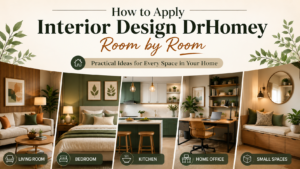
Start in the living room because it sets the tone for the whole home. Choose seating that encourages conversation, add layered lighting, and include one focal point such as art, a fireplace, or a textured accent wall. Don’t crowd every inch. Empty space has value. It gives the eye a place to rest and keeps the room from feeling frantic.
In the bedroom, aim for softness and stillness. Use calm colors, gentle lighting, and fabrics that feel inviting at the end of the day. A padded headboard, blackout curtains, and bedside lighting can change the mood instantly. DrHomey’s interior content also shows growing attention to layered bedroom lighting because it supports both comfort and function beautifully.
For kitchens, think like a strategist, not just a shopper. You need smooth movement between prep, cooking, cleaning, and storage. Keep landing space near the sink and cooktop. Make sure appliance doors don’t collide. Even stylish kitchens become annoying when the workflow is clumsy. The best ones feel almost invisible because every move happens naturally.
Small rooms need sharper editing, not less ambition. Use mirrors to bounce light, choose furniture with visible legs, and pick pieces that do more than one job. A storage ottoman, a fold-out desk, or a slim dining bench can solve several problems at once. When each item earns its keep, small spaces feel nimble instead of cramped.
Final Thoughts
Interior Design DrHomey works because it respects how people actually live. It favors functional elegance, emotional comfort, and smarter planning over flashy but hollow design. If you want a home that looks refined and feels easy to live in, this approach gives you a practical roadmap rather than empty decoration advice.
Visit homehacksdecoradtech.blog for more details.